

The backlight board is an optical component that provides a backlight light source in liquid crystal display products. Due to the lack of luminescent properties of liquid crystal glass itself, a light source, i.e. a backlight plate, will be added to the back of the liquid crystal glass as needed. The application scope covers medical, beauty, instrumentation, automotive equipment, industrial equipment, bank terminals, office automation, communication, electronic toys, and consumer products.
The working principle of an LED backlight board is to transform a point light source (LED) into a surface light source (backlight board, backlight).
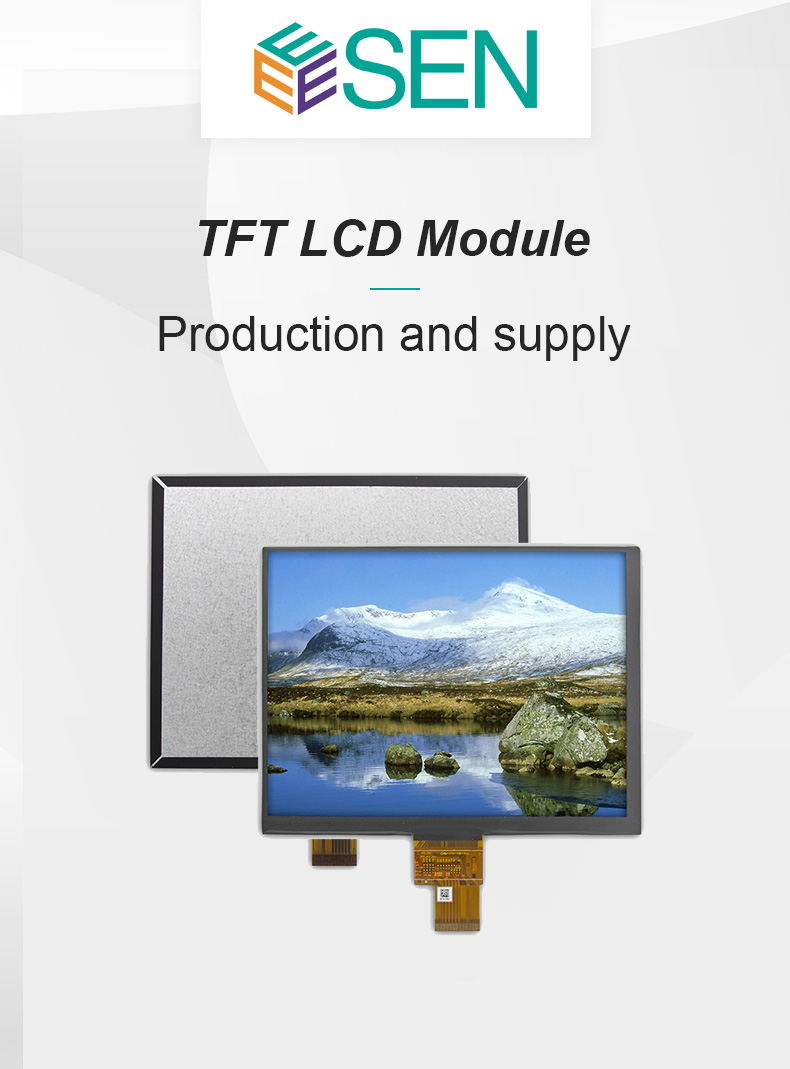
At present, the backlight panel is divided into three types based on the type of light source: EL, CCFL, and LED. According to the different distribution positions of the light source, it is divided into side light type and straight down type (bottom backlight type).
Edge light type: A backlight plate made of linear or point light sources installed on the side of a specially designed light guide plate. According to actual usage needs, it can be made into bilateral or even triangular shapes. Generally, edge backlight can be made very thin, but the light utilization rate of the light source is very low, and the thinner the light, the lower the utilization rate, about 50%. The technical core is the design and manufacturing of light guide plates. Edge light type is commonly used for LED backlight and CCFL backlight.
LED backlight: LED lights are also known as light emitting diodes. Compared to other light sources, a single LED light consumes very little power. From blue to red, LED lights come in many colors, with a special color being white. The commonly used color range is shown in Table 3. Among various colors, they can be roughly divided into two types: high highlight and low highlight: basically, Table 1 shows low highlight (although amber, orange, and red are also slightly highlighted).
Due to the fact that white is a mixed color with no obvious wavelength value, its coordinate values are used to represent it on the chromaticity chart. We customize it as "cold white" and "warm white". Various colors have color differences, with blue and white being more prominent, especially white, which current LED suppliers cannot effectively control.
◆ Bottom backlight type: It is a flat surface light source with a certain structure, which can be a continuous and uniform surface light source, such as an EL or flat fluorescent lamp; It can also be composed of more point light sources, such as dot matrix LEDs or incandescent backlight panels. Commonly used include LED dot matrix and EL backlight.
EL backlight: Electroluminescence is a cold light source that emits light through the intrinsic emission of fluorescent powder excited by an alternating electric field. Its advantage is its thinness, which can be 0.2~0.6 millimeters thick. The disadvantages are low brightness, short service life (usually 3000-5000 hours), inverter drive, circuit interference, flickering and noise generation. Electroluminescence is driven by an inverter and a driving integrated circuit.
At present, the frequency and load output voltage of driving integrated circuits cannot meet the typical conditions of electroluminescence (400 Hz, AC100V), so the brightness is lower than that of inverter driving. White light (full color) EL and LCD backlight panels appear one after another. But due to its dark brightness, it is basically used for small-sized LCD displays below 4 inches. For example, mobile phones, handheld computers, game consoles, etc. Full color (white light), large-sized brightness backlight panel, and now the mainstream still uses CCFL as the light source.